

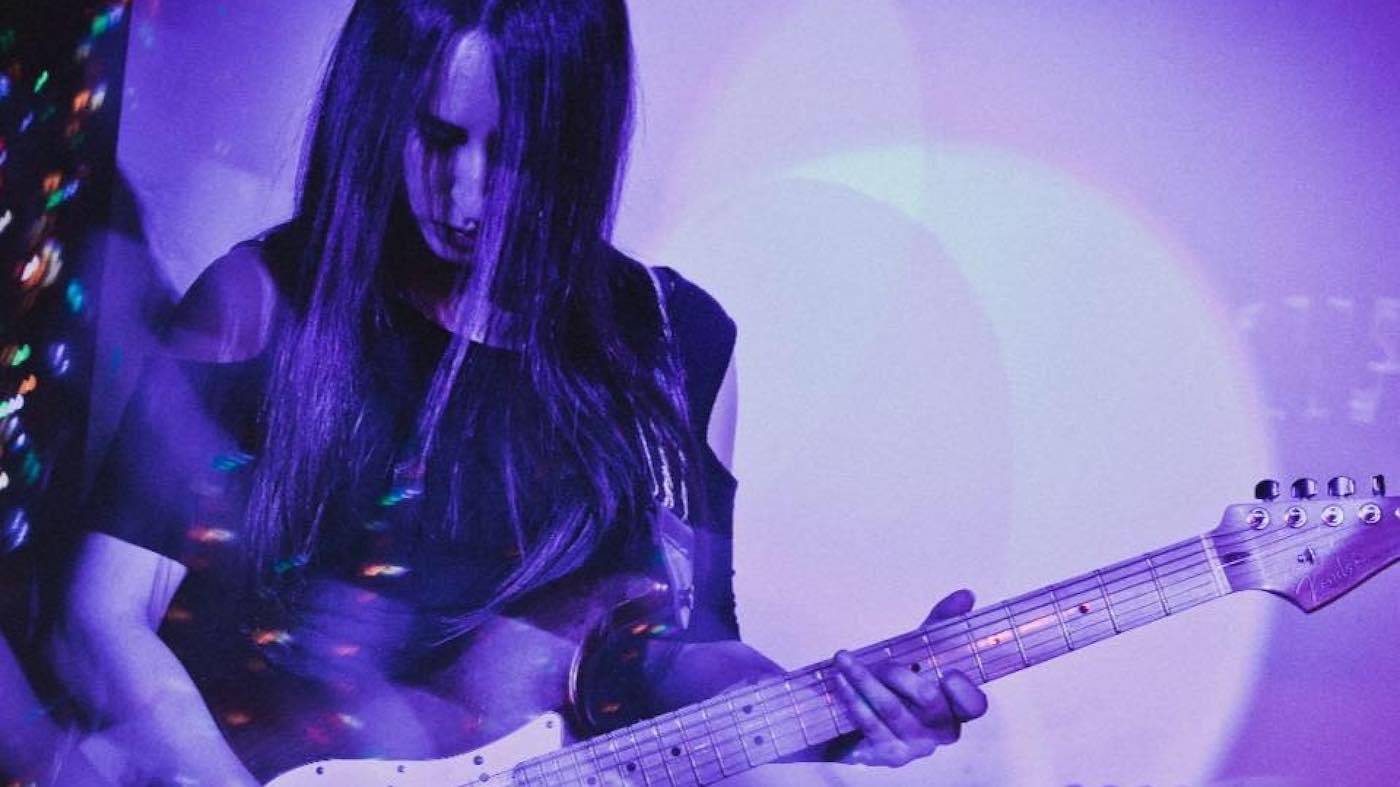
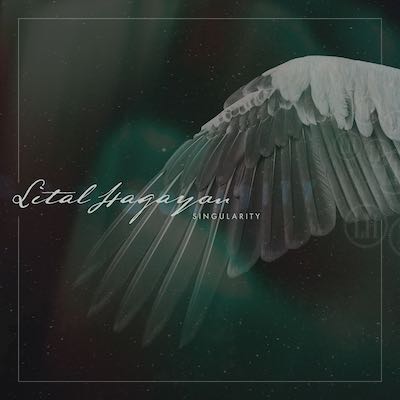
 Releasing today is the long-awaited debut album from Israeli dream pop artist Lital Hagayan. Luckily for me she was able to take time out from her busy schedule to talk over all things musical. We had a great chat about the album, Singularity, and how she defined her signature sound.
If you want to know how Lital got into music, the creation of Singularity and who her key influences are then read on!
Marky: Hi Lital! Your debut album is here. Can you tell us a bit about Singularity? What can we expect to hear?
Lital: The album Singularity was created during a difficult time in my life. I always say that the creation of the album was not planned, I mean, I did not know that I was creating an album. I experienced great sorrow; I was in great pain. The intensity of the emotions that filled me were unbearable and I had to channel them somewhere.
In fact, the order of the songs on the album is like the order of the period, each song was created one after the other, and so is the order of the songs on the album.
I think if I had to describe the album emotionally, and I would try to be as objective as I can, I would say that this album is sad. It describes a lot of sadness, disappointment, sorrow, handling, also anger, hope and faith. I think overall, Singularity is a journey, so if you would listen to the album from the beginning till the end, you would definitely feel a kind of war between the heart and the head. A war between the desire I had for everything to return to the way it was, and the understanding that reality has changed, and that I have to accept this new reality and move on, without the person I lost.
I can definitely say that making the album was a way to heal from many wounds and scars.
In short, I can say, Singularity takes its inspiration from a deep urge to heal from a dark and devastating period in my life. The album encompasses a diverse range of genres including progressive rock, shoegaze, alternative rock, psychedelia, dream pop, and electronic.
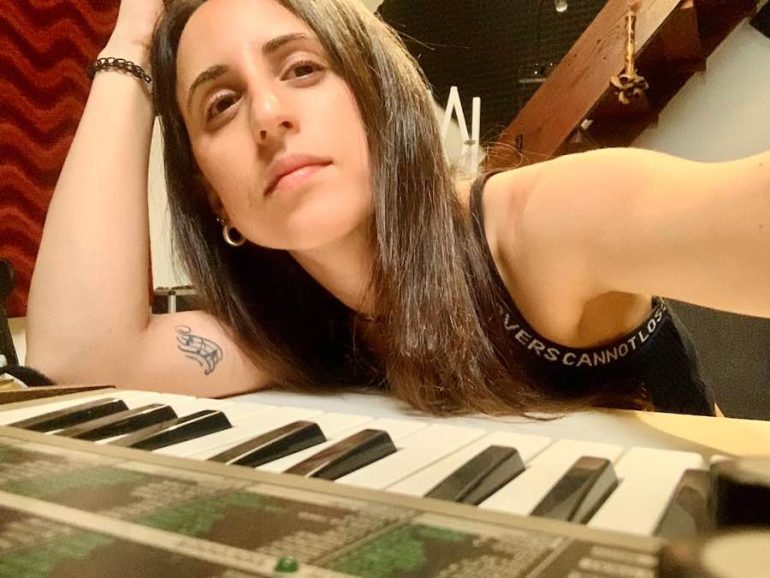
Marky: You pretty much recorded the whole album yourself. That’s an incredible achievement. Is there anyone who helped you out along the way you’d like to shout out?
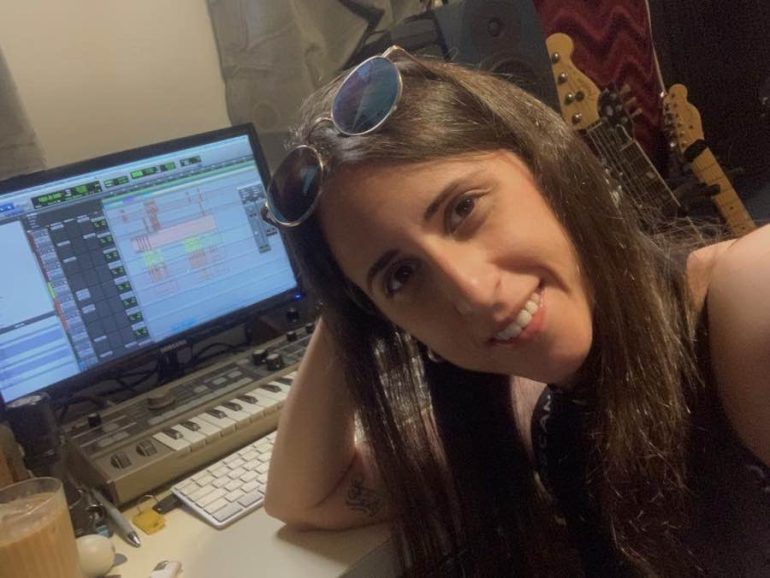
Here, in Israel, after graduating from high school, you go straight to serve in the army. Immediately after the release of my mandatory service in the army, I wanted to fulfill my dream, which is to make a living from music. And it is indeed a dream I have made come true. Since the age of 21 I have “lived” in recording studios. I’ve gone a long way on my own to teach myself to record in the best quality I can. I got to know recording equipment such as microphones, analogue equipment such as preamps, analogue effects, etc. but the world progressed very quickly in this field and I found myself working mostly digitally. I also got to know how to work both Cubase and Pro Tools, but my main DAW is Pro Tools. I worked in many recording studios in Israel, and with many well-known artists here in Israel. Little by little I started mixing songs, and over time also doing music production.
And during this path I took, I met many excellent and talented musicians, some of whom also became very good friends.
At that time, the period of the album creation, I was broken to pieces, and some of those colleagues were there for me as good friends. And when I started creating song after song, I slowly found the musicians that I chose to take part in this album.
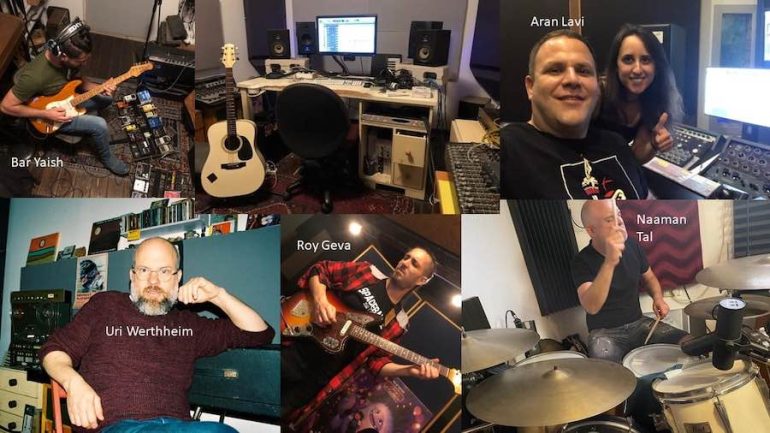
Then there is Roy Geva, who sat in a room next to me in one of the studios I worked at. Roy is a dubbing director and a brilliant guitarist and musician, who played many of the electric guitars on the album. The recording experience with Roy was one of the most fun. We would play with my pedal board to record interesting sources, reverbs with a long decay, shimmers. Roy also played bass on some of the tracks. We think very similarly so every idea I asked for, he executed, and executed it excellently! Roy And I also shared a studio together for one year.
Another very good friend who played some of the electric guitars on the album is Bar Ya’ish. Bar is a sick pedal head, ha ha ha. I met Bar as a client who came to one of the studios I worked at. And I was fascinated by his guitar playing. Bar came to my studio with two pedalboards!! Every board had lots of pedals, we always joked that he has pedal sickness. But pedals are fun! And we were able to bring out a heavenly, floating guitars sound, which gives the feeling like you are on a cloud. And also with Bar, everything was always flowing, what I was asking for he always played, and in a perfect way!
Another good friend who took part in the album, is a friend of many years, he is a work colleague named Naaman Tal. We met in 2013 at one of the studios I worked in, where he came for a guitar session. Over the years we became partners who musically produce artists’ songs and albums. I knew the work with Naaman the best, because we worked together for many years, and we have a large portfolio together. Naaman plays many instruments. On the album he played most of the drums, quite a few bass parts, and also some electric guitars. Naaman and I are like “one mind”. We know each other so well musically, so every recording session with Naaman is a dream. Naaman was an integral part of that this period, and today we are together. We have a stunning studio at home, with a lot of equipment, and we still produce music for artists together. We are a great team.
Another collaborator in the album is Uri Wertheim. We shared a mixing studio we rented together for five years. Uri is a sound engineer who specialises in analogue equipment. He is very much a vintage person and my partner in the mixing stage. When I got to that stage, I felt that I was saturated with the album, maybe not the most objective either. One of the things I did was embed the vocals into the mix. And I felt that I was in a perfectionism loop that was preventing me from moving forward because I couldn’t let go. When I finished mixing most of the album, I decided to share it with Uri. I let Uri go over my mixes. I trusted Uri a lot so he is an integral part of the mixes. Even though after Uri’s work, I found myself going through some of the channels and changing what was important to me, Uri is still an integral part of the album’s mix.
Another colleague is Aran Lavi. Aran is one of the best mastering engineers in Israel, and I have been working with him for many years. Each and every song of any artist I finish production and mix always sends to Aran for mastering. We did the mastering for a whole day, from morning until night at Aran’s studio. His studio is crazy, in a good way. Like such a studio B&B.
Finally, I want to tell you about a very good friend, who is a talented designer, who created all the video clips of all the single releases, named Ohad Elimelech. Ohad and I met for the first time through another good friend of mine, named Liya, who is a brilliant musician herself. Ohad created a video clip to one of her tracks named “No Meaning” and I was chosen to act in this video clip. It was the first time for me being in front of a real camera. In this clip the character I acted was supposed to be very sad, hurt and goth! Which was exactly where I was at these days, so I didn’t really need to act lol, it was just the way I felt. Anyway, Ohad is a music lover and collector. When he listened to the music I created, before mixing or anything- he rightfully told me “Your music is so Shoegaze! I love it!” and decided to create the video clips of the singles album. Ohad was there for me, and strengthened me all the way to keep on creating music. Ohad had really believed in me all along, and his connection to my music led him to create music videos that perfectly express the emotion in each song. On the first video Clip, ‘Eternity’, I remember I came to his studio to see his edit for the first time, and I stood there with tears in my eyes.
Marky: There is a sharply-defined sound throughout this album. How did you come to choose the instruments and sounds/tones for Singularity?
Lital: In the mixing studio that Uri and I shared, there was a simple white acoustic guitar that belongs to Uri. Every recorded acoustic guitar on the album is actually this guitar. And it’s a pretty simple guitar, and I was able to get a perfect sound out of it.
I had a fixed set-up for the acoustic guitar recording. I recorded it with a microphone I bought one year before, Slate Digital VMS, which was connected to a pre-amp with the exact same setup each time. I also recorded the vocals with the same set-up. I didn’t record them normally as one lead track. I recorded the lead vocals always doubling and after I finished recording all the lead vocals, I moved to layers of backing vocals. Most of the songs on the album have between 4 and 8 layers of vocals, because I’m obsessed with harmonies with backing vocals ha ha ha.
My point is that uniform sound does not depend only on the mix, but also on the recording and the production and arrangement of the song.
Most of the drums were recorded by the same drummer, except for one song (‘Waiting’), which was played by another drummer who happened to come one day to the studio where I worked. And in that song the drums are embedded in reverb, but I used triggers, I created a sample of a bass drum, and with the help of a plug-in, I used the same trigger, for most of the drums in the mix stage. I combined it with the recorded bass drum to create authenticity.
There are also two songs where the rhythm section is totally electronic, and also every sample I chose to use is actually combined with layers of samples. And regarding the electronic sound, I think that you can definitely hear on the album that in many of the songs, there is an electronic sound, loops that blend in with the drums. I definitely believe that this is part of the uniform sound.
I recorded most of the guitars with the same Fender amplifier, and in every song, there is at least one if not two guitars coming out of my pedal board with my reverb, and this also creates uniformity in the sound. Also in each song, in addition to the reverb recorded from the pedal, I added a reverb plug-in, to give the reverb a stereo feel. There is a lot of work with panning in the mixes, and also the layers of the synths I added, usually either double the electric guitars, or give ground to everything that happens around.
The bottom line is that the sound of an album is not only influenced by the mix, but by the sum of recording, production, processing and even the creation process itself.
Marky: Israel isn’t known as a hotbed of shoegaze/dream pop textures and colours. What initially attracted you, and what gave you hope that you might break through in this unique sound space?
Lital: Well, that’s a beautiful question! To be honest, I was really in a bad condition in those early days.
I felt my life fall apart, my heart was broken to pieces, I was sad, so sad…I felt I was waiting for someone who might never be the same person again which is really hard. Anyone who has lost someone can relate, what a powerful feeling of helplessness it is to miss someone you know can never come back. So, nothing interested me except making music. While I was drowning in front of the Pro Tools, editing, mixing, playing or singing, I was in a state of disconnection to all these bad feelings I had. I didn’t even have in mind if anyone would ever listen to my music, I didn’t even know all this would become an album!
But I got lucky, so lucky! To meet a beautiful scene full of beautiful people and musicians, who support me and other musicians so much. I got lucky to be played on DKFM Shoegaze Radio. I don’t take it for granted. It’s such a big honour for me, that I cannot explain! Something I appreciate a lot and I’m thankful for every day.
Marky: If you had to pick one song from Singularity to give to a new listener, which one would hook them in and why?
Lital: I’ll be honest and say that I actually do have a favourite on the album, which is ‘Like I Remember You’. I like both the lyrics and the music. There is a lot of darkness in this song. I think this song is one of the best on the album, in my opinion. When I used to play it for friends, I always cried, like every time. It clearly describes the feelings I experienced from this whole story. I think this song is the centre piece of the album. It has a winter feel, because it was indeed written in the first rain of everything that happened. The truth is that this song started to be written as poetry on my iPhone notes, when I was in bed, trying to fall asleep. I was then living in an apartment with a roommate. And my room had an exit to a small balcony. When the rain started, I thought to myself how time passes, and the person I’m waiting for to recover and return back to me – doesn’t.
The song describes the rain, which washes away everything except my pain of him disappearing. He really was gone. No one knew where he was or what was happening to him. His family even disowned me. I loved him so much, and I didn’t have time to say goodbye. His illness defeated everything and the song describes how I remember him being happy with life, creating music, smiling. I felt that he lived in a parallel world, which I had no access to. After I released the song, I think I came to terms with reality.
Marky: As a fellow gazer I’d be really keen to know more about the gear you use to create your amazing tones?
Lital: Oh wow, where do I start? Lol! As I mentioned before, I had a specific set-up to record acoustic guitar and the vocals, which was a Slate Digital VMS microphone and a preamp named Bellari RP 533 connected to the Aurora lynx interface.
The acoustic drums were recorded by Fireface 800 interface, combined with TLA 5051 for the bass drum, Albatross, UAD 610, Gap 73 and DBX 160A compressor which the rooms mics were connected to.
The microphones for the drums are: for the kick- Electro Voice n/d868, snare top has AKG D5, snare bot with AKG D40, overheads with AKG perception 170, tom with sm7b, floor with RE320, room are twin of bumble bee ribbons.
Electric guitars were recorded with Fender pro junior amplifier, sometimes with RE20 mic and sometimes with sm57, but there are few kinds of guitars in my album, there’s Japanese Fender Jaguar, American HSS Strat Fender American Strat and a Hamer HSS electric guitar.
On the album there are a few pedals used. Starting with the DOD milk box compressor pedal and TC Electronics Arena reverb, combined with the Flashback delay. Another setup was Cali 76 compressor (Origin FX), Strymon Blue Sky reverb combined with Strymon El Capistan Delay and sometimes combined with Boss DD3 Delay.
The final set up of guitar pedals was Mercury 7 reverb, Line 6 M5 with the shimmer preset combined with Source Audio Nemesis Delay.
Marky: Which bands would you say were the biggest influence on you as you recorded Singularity?
Lital: The bands I am most influenced by in life are Porcupine Tree and Pink Floyd. As a girl I used to listen a lot to their music. It definitely permeates the mind. but my musical influences come from many other bands such as Sigur Rós, Explosions in The Sky, Slowdive, Cocteau Twins, This Mortal Coil. It’ll End With Tears I was listening to on a loop! Also, The Cure, We Lost the Sea, 65daysofstatic, TrentemØller and Drab Majesty.
Marky: Singularity is very much an album that documents an incredibly traumatic period in your life. Did you find the process cathartic and is it something you would recommend for other musicians going through a similar emotional time?
Lital: I can definitely say that the creation of the Singularity helped me with dealing with the crisis I went through. Imagine a glass, into which you pour water, and the glass fills with water – but the water continues to pour into the glass until there is no room and the water spills out. That’s how I felt. Because of the intensity of pain and sorrow I was feeling, I just couldn’t move forward.
The music I made was the only place where I could really say what I wanted, how I wanted with no fear of judgement. I held on to the music, it gave me hope, meaning, grounding and healing me. I can warmly recommend to anyone who is going through a difficult time to create music, to deal with music, in any possible way. Because music is life.
Marky: Do you have any plans to play live shows to promote the new album?
Lital: During the time I was creating and working on the album, I would close my eyes, play one of the songs that at that specific moment I was working on, and imagine myself on stage, singing the song with the guitar. The truth is that I also imagined the beloved I was waiting for with me on the stage. During the creation of the album, I thought everything would fall back into place.
In any case, I can definitely see it happening, but unfortunately not in Israel. There is no audience in Israel, there is no connection between my music and my country. I have thoughts of visiting England, Scotland, and also the USA, I don’t know when but I definitely see it happening. And I also had thoughts of doing a small acoustic show online.
I’d like to thank my good friend Lital for taking the time to talk to us and fill us in on how the album came about.
Singularity is available now from the Lital Hagayan Bandcamp page. Make sure you follow her on Facebook, Instagram and YouTube.
Post comments (0)